
The 5 Point Ear Protocol (aka NADA) & The Many Benefits
Let’s talk about a standardized auricular (ear) acupuncture protocol known as NADA (National Acupuncture Detox Association).
Firstly, how did it come about? Why is it called NADA?
The protocol was created in response to the opioid epidemic in the 1970’s with the guidance of emerging research being done in China with Auricular acupuncture for pain relief. The 5 needle protocol was created and standardized in 1979, and by 1985 the National Acupuncture Detox Association was established to support the treatment of mental health and addiction and streamline care for an overwhelming public health problem affecting a large number of people.
The research on its effectiveness is extensive for addictions/substance use, mental health, behavioural issues, sleep, PTSD, chronic stress and trauma.
I prefer to call this the 5 Point Protocol instead of NADA because while this protocol is highly effective for addiction and related symptoms, truly these points together do SO much more than treat addiction. The term 5-Point Protocol (not coined by me) opens the door for this treatment to be used to support a wider range of conditions!
What are the points used?
There are 5 points used in the protocol, as the colloquial name I prefer (5 Point Protocol) suggests ;). Sometimes they are done on only 1 ear, and sometimes on both. The length of time can vary person to person and treatment to treatment.
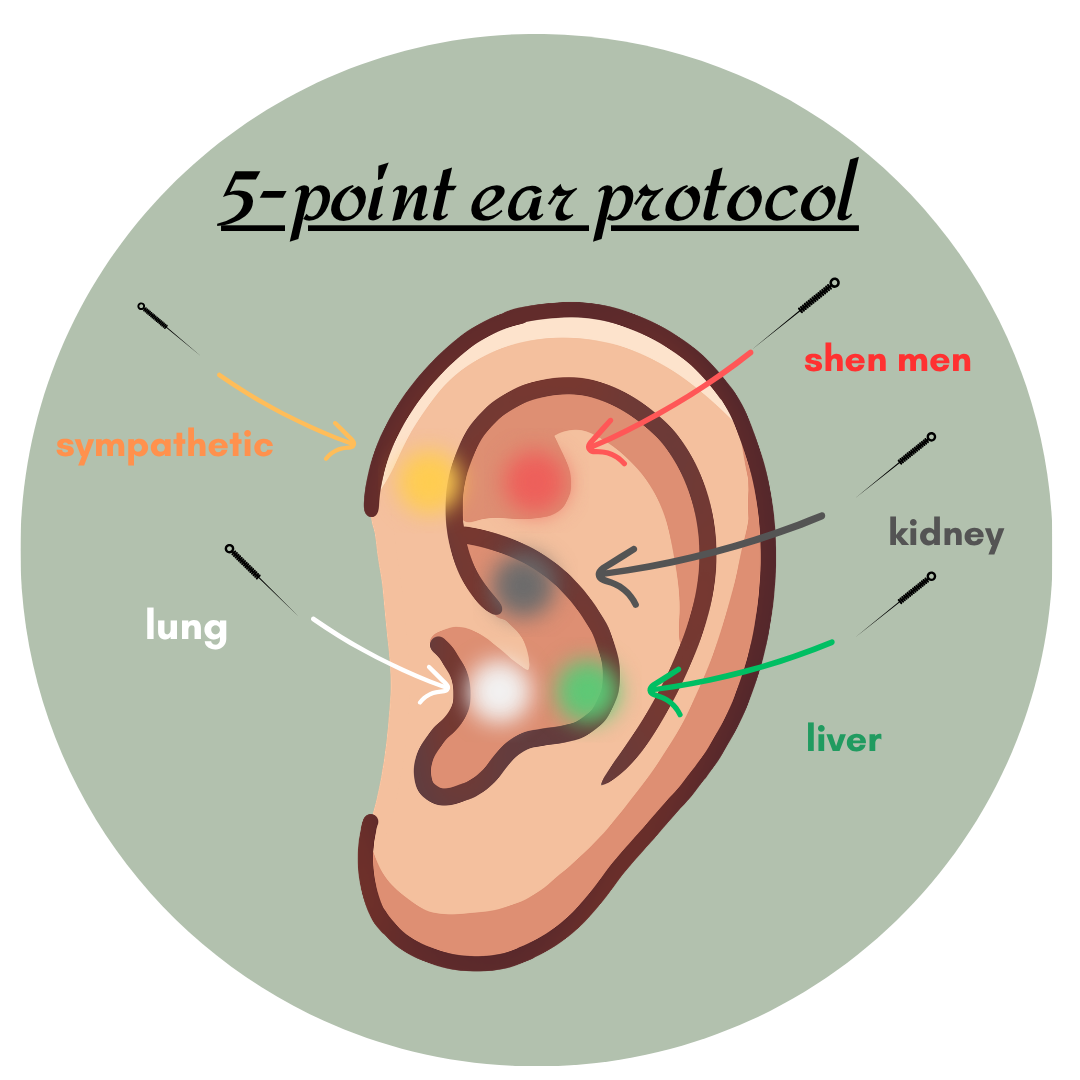
The 5 Point Ear Protocol
The points are:
The Lung Point
The Liver Point
The Kidney Point
Shen Men (Heart)
Sympathetic Point
What are the functions of each point?
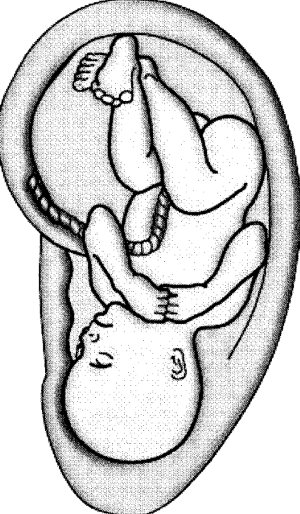
To explain how this protocol can be used to support a wide range of conditions, it’s useful to dive into what each point does. In auricular acupuncture, the ear is looked at as a microsystem of the body. Mapped onto the ear is a fetus, similar to how the homunculus of the nervous system is mapped onto the motor cortex and sensory cortex of the brain, and each area relates to a part of the body.
The picture of this microsystem is depicted on the image to the right (Oleson, 2002).
The Lung Point
This was the first point studied in the creation of this protocol for withdrawal symptoms. It functions as an analgesic, or pain management point.
As its name suggests, it is linked to the Lung. The Lung in the theory underlying acupuncture (namely Chinese Medicine) has functions that resemble what the Lung does in Western anatomy/physiology, but also a few more functions.
Relevant Aspects of The Lung in Acupuncture Theory:
Associated with the emotion of grief
Breathing in Air qi
Moves qi and blood as part of our circulation
Associated with the skin
The Lung Point of the ear can treat:
cough
issues of the skin and sweating
hoarseness
pain
The Liver Point
This point is crucial as a part of the protocol as the Liver in acupuncture theory has many functions related to overall wellbeing, and is especially relevant here to emotional health.
Relevant Aspects of The Liver in Acupuncture Theory:
Associated with the emotion of anger
Responsible for the smooth flow of qi and blood throughout the body
Regulates emotions
Supports decision making
The Liver Point of the ear can treat:
Chest tightness
Pain in tendons/muscles
Liver qi stagnation pattern: mood swings, frequent sighing, irritability, pain
The Kidney Point
There is no organ in acupuncture theory that is unimportant of course, but the Kidney might take the cake as really being the Origin of our wellbeing. Much of our constitutional wellbeing originates here, and it governs much to do with our health and wellness. It is also associated with fear, a common emotion that is associated with the many things that the 5 Point Protocol has been proven to support.
Relevant Aspects of The Kidney in Acupuncture Theory:
Associated with the emotion of fear (and also wisdom)
Responsible for ageing, reproduction, and is the root of our Essence, Yin & Yang - our vitality
Stores our Will Power (Zhi)
Associated with our long term memory & our marrow (in Chinese Medicine this term is linked to bones, but also is more linked to the brain than we would say in Western Medicine)
The Kidney Point of the ear can treat:
Headaches
Insomnia
Dizziness
Supporting the brain/marrow
Hormonal support
Chronic health conditions
Shen Men (of the Ear)
This point is widely used in a lot of different approaches to ear acupuncture. Its direct translation is “Spirit Gate”. The term “shen” refers to the Spirit in Chinese Medicine that resides in the heart. This spirit is most closely associated with our consciousness in western thought. It houses so much of who we are, and is related to our memory. The Shen of the heart is important for our sense of identity and our ability to connect.
Relevant Aspects of The Shen:
Associated with the Heart & housed in the Heart
Closely associated to our consciousness and sense of self
Related to our memory
Fosters connection
Important to have a rooted “shen” for sleep
The Shen Men (Spirit Gate) of the ear can treat:
Insomnia
Panic
Anxiety
Forgetfulness/memory issues
Stress
The Sympathetic Point
As its name suggests, this point is supportive to regulation of the Sympathetic (and Parasympathetic) nervous systems.
Relevant Aspects of The Sympathetic Nervous System:
Regulates our breathing
Governs our stress response
Parasympathetic/sympathetic balance allows us to respond to stressors OR rest and relax
An overactive sympathetic nervous system that does not downregulate and allow for a parasympathetic state can lead to chronic stress responses in the body
The Sympathetic Point and relevant things it treats:
Appropriate stress response
Sleep disturbances
Muscle relaxation
Panic disorders
Regulating the nervous system (typically downregulation into parasympathetic states)
If any of the actions of the above 5 points speak to you, this protocol may support you in feeling better in your body and finding balance in your emotional, physical, and spiritual wellbeing.
REFERENCES:
Carter, K., & Olshan-Perlmutter, M. (2014). NADA protocol: Integrative acupuncture in addictions. Journal of Addictions Nursing, 25(4), 182–187. https://doi.org/10.1097/JAN.0000000000000045
Cheng, X. (Ed.). (1999). Chinese acupuncture and moxibustion. Foreign Languages Press.
Oleson, Terry. (2002). Auriculotherapy stimulation for neuro-rehabilitation. NeuroRehabilitation. 17. 49-62. 10.3233/NRE-2002-17107.
