
A space for
information, self care tips, musings
All information shared here will be referenced wherever possible, but may also include personal opinions and reflections of the author. It is not intended to be diagnostic, nor replace any necessary healthcare consultations; my intent is to provide information, empower self care, and to help develop an understanding of acupuncture and its usefulness to those who may be curious.
The 5 Point Ear Protocol (aka NADA) & The Many Benefits
Let’s talk about a standardized auricular (ear) acupuncture protocol known as NADA (National Acupuncture Detox Association).
Firstly, how did it come about? Why is it called NADA?
The protocol was created in response to the opioid epidemic in the 1970’s with the guidance of emerging research being done in China with Auricular acupuncture for pain relief. The 5 needle protocol was created and standardized in 1979, and by 1985 the National Acupuncture Detox Association was established to support the treatment of mental health and addiction and streamline care for an overwhelming public health problem affecting a large number of people.
The research on its effectiveness is extensive for addictions/substance use, mental health, behavioural issues, sleep, PTSD, chronic stress and trauma.
I prefer to call this the 5 Point Protocol instead of NADA because while this protocol is highly effective for addiction and related symptoms, truly these points together do SO much more than treat addiction. The term 5-Point Protocol (not coined by me) opens the door for this treatment to be used to support a wider range of conditions!
What are the points used?
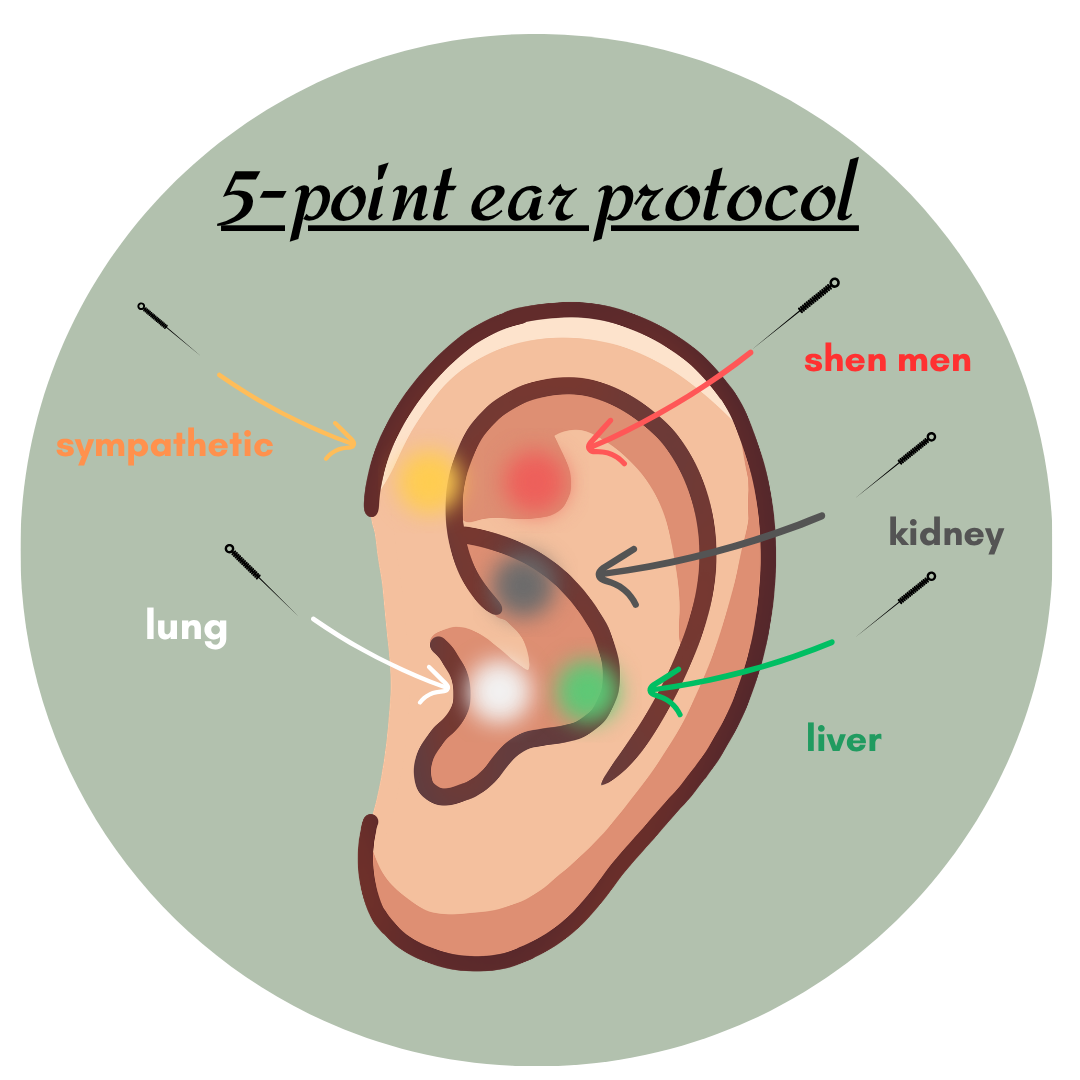
There are 5 points used in the protocol, as the colloquial name I prefer (5 Point Protocol) suggests ;). Sometimes they are done on only 1 ear, and sometimes on both. The length of time can vary person to person and treatment to treatment.
The 5 Point Ear Protocol
The points are:
The Lung Point
The Liver Point
The Kidney Point
Shen Men (Heart)
Sympathetic Point
What are the functions of each point?
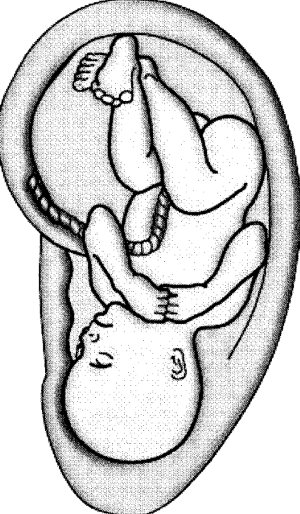
To explain how this protocol can be used to support a wide range of conditions, it’s useful to dive into what each point does. In auricular acupuncture, the ear is looked at as a microsystem of the body. Mapped onto the ear is a fetus, similar to how the homunculus of the nervous system is mapped onto the motor cortex and sensory cortex of the brain, and each area relates to a part of the body.
The picture of this microsystem is depicted on the image to the right (Oleson, 2002).
The Lung Point
This was the first point studied in the creation of this protocol for withdrawal symptoms. It functions as an analgesic, or pain management point.
As its name suggests, it is linked to the Lung. The Lung in the theory underlying acupuncture (namely Chinese Medicine) has functions that resemble what the Lung does in Western anatomy/physiology, but also a few more functions.
Relevant Aspects of The Lung in Acupuncture Theory:
Associated with the emotion of grief
Breathing in Air qi
Moves qi and blood as part of our circulation
Associated with the skin
The Lung Point of the ear can treat:
cough
issues of the skin and sweating
hoarseness
pain
The Liver Point
This point is crucial as a part of the protocol as the Liver in acupuncture theory has many functions related to overall wellbeing, and is especially relevant here to emotional health.
Relevant Aspects of The Liver in Acupuncture Theory:
Associated with the emotion of anger
Responsible for the smooth flow of qi and blood throughout the body
Regulates emotions
Supports decision making
The Liver Point of the ear can treat:
Chest tightness
Pain in tendons/muscles
Liver qi stagnation pattern: mood swings, frequent sighing, irritability, pain
The Kidney Point
There is no organ in acupuncture theory that is unimportant of course, but the Kidney might take the cake as really being the Origin of our wellbeing. Much of our constitutional wellbeing originates here, and it governs much to do with our health and wellness. It is also associated with fear, a common emotion that is associated with the many things that the 5 Point Protocol has been proven to support.
Relevant Aspects of The Kidney in Acupuncture Theory:
Associated with the emotion of fear (and also wisdom)
Responsible for ageing, reproduction, and is the root of our Essence, Yin & Yang - our vitality
Stores our Will Power (Zhi)
Associated with our long term memory & our marrow (in Chinese Medicine this term is linked to bones, but also is more linked to the brain than we would say in Western Medicine)
The Kidney Point of the ear can treat:
Headaches
Insomnia
Dizziness
Supporting the brain/marrow
Hormonal support
Chronic health conditions
Shen Men (of the Ear)
This point is widely used in a lot of different approaches to ear acupuncture. Its direct translation is “Spirit Gate”. The term “shen” refers to the Spirit in Chinese Medicine that resides in the heart. This spirit is most closely associated with our consciousness in western thought. It houses so much of who we are, and is related to our memory. The Shen of the heart is important for our sense of identity and our ability to connect.
Relevant Aspects of The Shen:
Associated with the Heart & housed in the Heart
Closely associated to our consciousness and sense of self
Related to our memory
Fosters connection
Important to have a rooted “shen” for sleep
The Shen Men (Spirit Gate) of the ear can treat:
Insomnia
Panic
Anxiety
Forgetfulness/memory issues
Stress
The Sympathetic Point
As its name suggests, this point is supportive to regulation of the Sympathetic (and Parasympathetic) nervous systems.
Relevant Aspects of The Sympathetic Nervous System:
Regulates our breathing
Governs our stress response
Parasympathetic/sympathetic balance allows us to respond to stressors OR rest and relax
An overactive sympathetic nervous system that does not downregulate and allow for a parasympathetic state can lead to chronic stress responses in the body
The Sympathetic Point and relevant things it treats:
Appropriate stress response
Sleep disturbances
Muscle relaxation
Panic disorders
Regulating the nervous system (typically downregulation into parasympathetic states)
If any of the actions of the above 5 points speak to you, this protocol may support you in feeling better in your body and finding balance in your emotional, physical, and spiritual wellbeing.
REFERENCES:
Carter, K., & Olshan-Perlmutter, M. (2014). NADA protocol: Integrative acupuncture in addictions. Journal of Addictions Nursing, 25(4), 182–187. https://doi.org/10.1097/JAN.0000000000000045
Cheng, X. (Ed.). (1999). Chinese acupuncture and moxibustion. Foreign Languages Press.
Oleson, Terry. (2002). Auriculotherapy stimulation for neuro-rehabilitation. NeuroRehabilitation. 17. 49-62. 10.3233/NRE-2002-17107.
Acupuncture: more than needles & pain
Acupuncturist Toolkit
Most hear the term “acupuncture” and think of needles… and of course they would not be wrong! BUT it is not the whole picture of how Acupuncturists can support people. Acupuncture has a rich and complicated history - as does anything with over 2000 years of history. What we think of as Acupuncture in the West falls typically under the umbrella of Traditional Chinese Medicine (TCM). In BC, Acupuncturists are regulated by a College that outlines our scope of practice based on TCM principles (College of Complementary Health Professionals of British Columbia, 2026).
Some of the therapies that Registered Acupuncturists can use to support people include:
Acupuncture - the thin needles you think of :)
Moxibustion - burning of a herb known as mugwort to warm up acupuncture points
Cupping - the practitioner creates a vacuum inside of cups made of glass (fire cupping) or silicone to form a strong suction onto the skin and tissues beneath releasing tension and stagnation
Electrical Stimulation - applying a small current through two adjacent acupuncture needles
Tuina - an umbrella of specific massage techniques that support moving qi and blood (promote healthy circulation) throughout the body
Diet therapy & lifestyle advice - self explanatory, but from a TCM view rather than from a Western lens
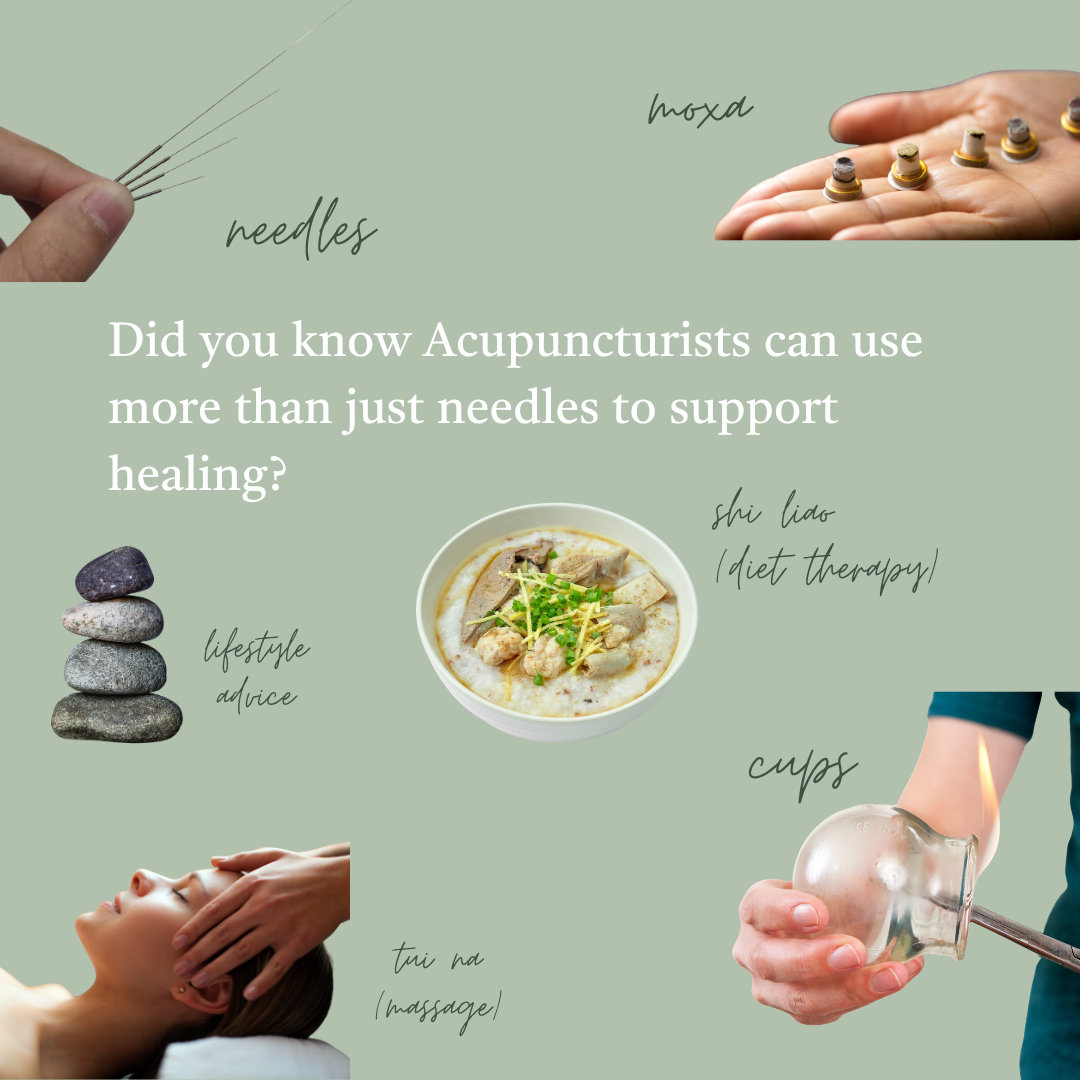
Therapies and modalities that Registered Acupuncturists in BC are able to use to support people based on their individual needs.
Acupuncture is NOT Dry Needling/IMS, but it CAN treat Orthopedic Injuries! That’s just not ALL it does…
Something I have noticed when I have mentioned that I am an Acupuncturist is that the response is often along the lines of: “Oh, I have had acupuncture when I got tennis elbow, I’ll keep you in mind for if I get injured again!" or “Oh my Physiotherapist gave me Acupuncture when I hurt my hip and it was so painful”.
It is totally true that acupuncture can treat injuries from sport, repetitive strain, accidents, or the like…. it simply is not the whole picture.
Acupuncture can treat a variety of ailments that are more external - in TCM (very simply put) we talk about injuries to the 12 meridians or channels as being more external, and that would apply to what we refer to as Orthopedic Pain conditions in our Western Culture. Some of these include joint sprains, muscle strains or “pulls”, muscle “knots”, pinched nerves, or tendonitis (HealthLink BC, n.d; Maciocia, 2015).
It’s also true that many other practitioners are licensed to administer needles for pain relief… it’s just not Acupuncture. What people are typically referring to when they’ve received a treatment involving needles from a Physiotherapist is called “Dry Needling” or Intramuscular Stimulation (IMS). This involves the insertion of needles into an affected muscle tissue typically at a local “trigger point” (colloquially a muscle “knot”) to release the tissue and promote healing (Medical News Today, 2024). This treatment has been really effective for many people - BUT BUT BUT it is not Acupuncture. I am not here to slam this modality nor the practitioners that administer it, I have talked to many people for which it has been life changing, I simply think it is worth further differentiation.
As mentioned previously, Acupuncture theory is rooted in 2000+ years of history and the points chosen are based on a series of channels and treatments are most often planned based on a comprehensive diagnostic process for which the practitioner attended years of schooling to learn. An Acupuncturist may needle a trigger point and elicit the same release that an IMS therapy is aiming for, only it won’t be their standalone plan and most won’t be manipulating the needle as harshly - so in most cases it will hurt A LOT LESS. Acupuncturists are trained to look at the entire body as system wherein nothing can be separated from the whole. Every injury or ailment is assessed as a part of a whole system, and an injury on your arm is treated as a channel pathology that by TCM theory may stem from a broader issue somewhere entirely different!
This is where Acupuncture becomes more than just needles and pain. It treats systems - channels that have inextricable links to internal organs. In this view the body is not just a machine with sometimes faulty mechanics or a broken engine, but rather an ecosystem that can sometimes find itself out of balance for one reason or another. We look locally and we zoom out. (Maciocia, 2015)
Acupuncturists Can Treat Internal Medicine Dis-eases
When we zoom out and look at the body from a TCM lens, we see patterns and propensities. Everyone’s unique ecosystem that is constantly changing - a system that can innately find its own balance when we are in good health, but may need support in other times.
Symptoms become apparent when we shift out of the healthy and normal ebbing and flowing, we acquire stagnation or we become deficient (to put it as simply as possible). Every dis-ease has symptoms and the collection of these that varies case to case becomes a pattern. The acupuncture points along the channels, each linked to specific organs, help us to direct the ebbs and flows where they might need redirecting. They help us to impart innate wisdom into a system that needs a reminder of its nature.
From a framework that looks very different to Western Medicine, an Acupuncturist can help to support the treatment of a variety of ailments that may be surprising if you are unfamiliar.
A few of the most common ailments that Acupuncture is great at supporting are:
Chronic pain conditions
Acute pain and associated injuries
Digestive concerns (IBS symptoms, constipation, diarrhea, bloating, nausea)
Headaches (migraines, hormonal headaches, tension headaches, etc.)
Mental health conditions (anxiety, depression, addiction, stress)
Sleep issues (insomnia, parasomnia)
Fertility & pregnancy
Hormonal disturbances (menopause, menstrual disorders, menstrual pain, infertility, ovulation issues, breast pain, erectile dysfunction)
This list (CTCMCPANL, n.d.; Healthlink BC, n.d.) is far from exhaustive so if you have any questions about whether Acupuncture might be able to support you with whatever affliction you are dealing with, please feel free to reach out and we can explore that together!
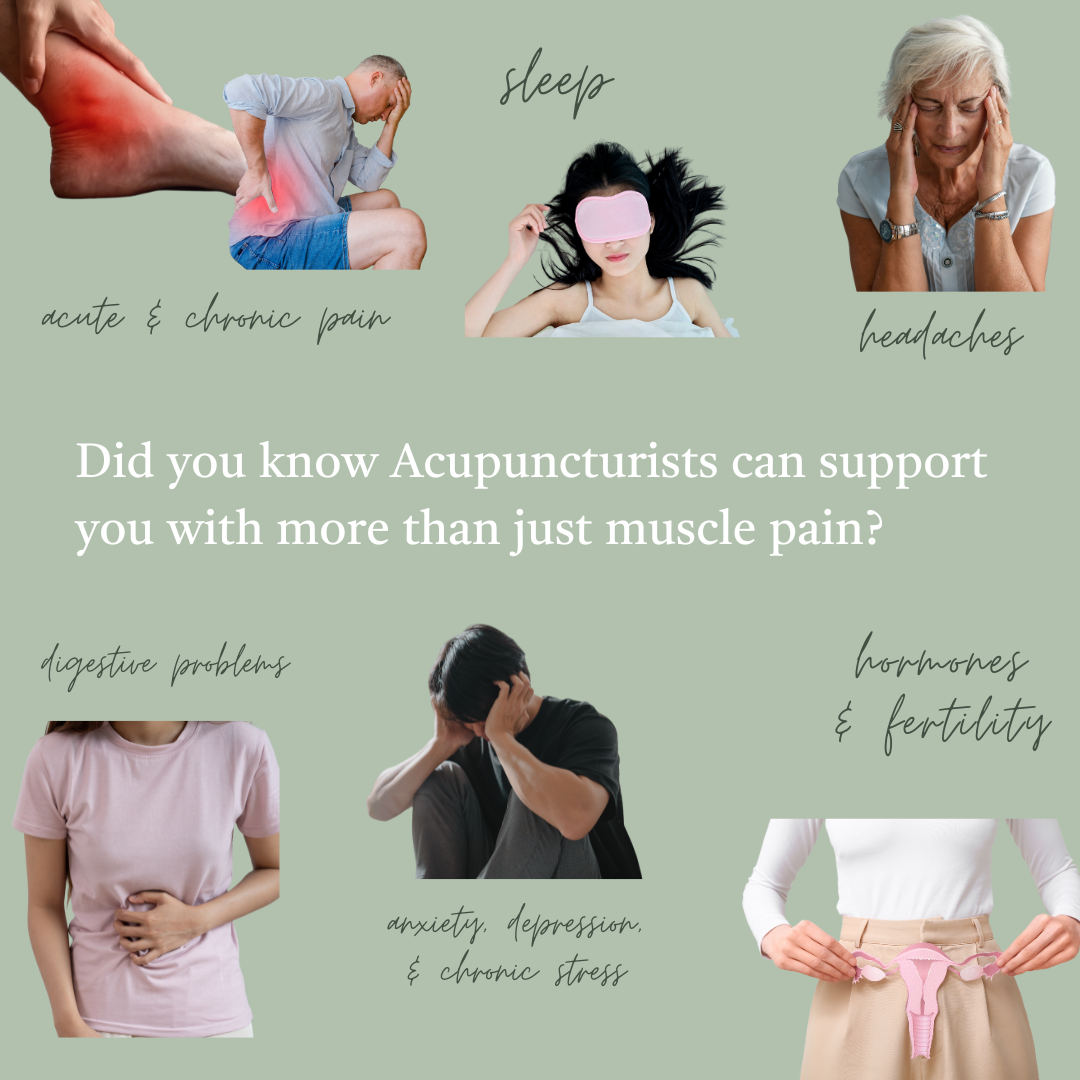
Some common ailments for which Acupuncture can support symptom relief.
References:
College of Traditional Chinese Medicine Practitioners and Acupuncturists of Newfoundland and Labrador. (n.d.). What health conditions can acupuncture treat?https://ctcmpanl.ca/what-health-conditions-can-acupuncture-treat/
College of Complementary Health Professionals of British Columbia. (2026, May). Scope of practice explanatory statement: Traditional Chinese medicine and acupuncture (TCMA). https://cchpbc.ca/wp-content/uploads/2026/05/SoP.ExplanatoryStatement-TCMA.V8FINAL.pdf
Giovanni Maciocia. (2015). The foundations of Chinese medicine: A comprehensive text (3rd ed.). Elsevier.
HealthLink BC. (n.d.). Acupuncture. https://www.healthlinkbc.ca/healthwise/acupuncture
Medical News Today. (2024, October 16). Dry needling vs. acupuncture: What the research says. https://www.medicalnewstoday.com/articles/321989